
 Send Inquiry
 07971190993


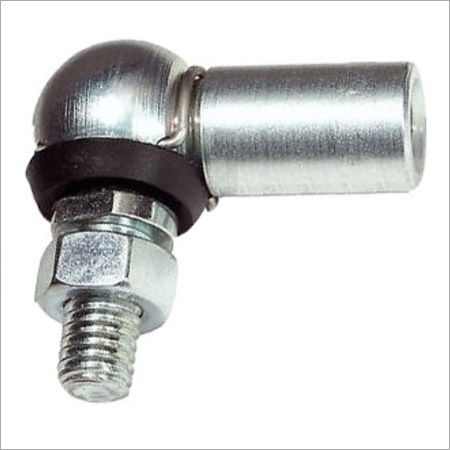
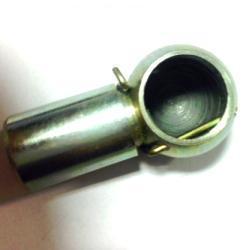
Ball Joint Linkage Type
25.00 - 50.00 INR
Product Details:
- Length 50mm
- Diameter 12mm
- Dimension (L*W*H) 50x30x30mm
- Surface Treatment Zinc Plated
- Heat Treatment Case Hardened
- Head Type Ball Joint Head
- Standard DIN ISO 8139
- Click to View more
X
Ball Joint Linkage Type Price And Quantity
- 25.00 - 50.00 INR
- 100 Piece
Ball Joint Linkage Type Product Specifications
- Ball Joint Head
- Case Hardened
- DIN ISO 8139
- Zinc Plated
- Industrial Machinery Automotive Applications
- 50x30x30mm
- 12mm
- 50mm
- Grade 8.8
Product Description
- Standard: Linkage....
- Specification:As per the attached PDF file or as per customer requirement
- Threading: Right hand (R.H.), Left hand (L.H.)
- Surface treatment: clear/yellow zinc plated, olive green zinc plated
- Housing - EN 1AL(free cutting steel), 11SMnPb30, S.S. 304, S.S. 316
- Ball Stud - EN 1AL, EN 1AL case hardened, EN 8, EN 8 Hardened, S.S. 304, S.S. 316
- Internal ring - Hardened spring steel
Precision Engineering for Automotive and Industrial Demands
Designed for both industrial machinery and automotive requirements, this ball joint linkage delivers superior performance owing to precision engineering and strict adherence to DIN ISO 8139. Its zinc-plated, case-hardened body withstands high loads and resists wear, making it highly dependable over extended use. The 12mm diameter and specified dimensions offer compatibility across a majority of standard systems, ensuring seamless integration and optimal function.
Corrosion Resistance and Enhanced Durability
The zinc-plated surface keeps the ball joint protected from rust and chemical wear, crucial for applications exposed to harsh environments. Case hardening extends the part's operational life by improving resistance to surface damage. These treatments, combined with a Grade 8.8 specification, provide the resilience needed for rigorous industrial and automotive conditions.
FAQ's of Ball Joint Linkage Type:
Q: How is the ball joint linkage type installed in industrial machinery and automotive systems?
A: The ball joint linkage is generally installed by aligning its 12mm diameter shaft with the corresponding link or mounting bracket in machinery or vehicles. Standardized dimensions and compliance with DIN ISO 8139 make it adaptable and straightforward to integrate.Q: What benefits does zinc plating provide to this ball joint linkage?
A: Zinc plating offers superior corrosion resistance, ensuring that the ball joint can function reliably even in environments exposed to moisture and chemicals. This treatment helps extend the component's service life and reduces the need for frequent maintenance.Q: When should this ball joint linkage be considered for use in applications?
A: This component is ideal for situations requiring precise movement transfer and alignment, especially where high load-bearing and resistance to wear are crucial. It is suitable for both new installations and replacement needs in industrial machinery and automotive systems.Q: Where can customers in India source these ball joint linkage types?
A: Customers can obtain these ball joint linkages directly from manufacturers, exporters, suppliers, distributors, and traders across India, ensuring accessibility for both bulk and targeted industry needs.Q: What process is used to enhance the durability of the ball joint linkage?
A: The joint undergoes a case hardening process, which increases surface hardness while maintaining a tough core. This, along with the zinc plating, bolsters its resistance to wear and corrosion, making it durable even under heavy operational loads.Q: What are the main usage scenarios for this product?
A: Commonly used in automotive steering and suspension assemblies as well as industrial linkages, the ball joint provides flexible movement and precise force transmission, necessary for efficient machine and vehicle functioning.Q: How does the Grade 8.8 rating impact the performance of the ball joint linkage?
A: The Grade 8.8 classification indicates a high level of tensile strength, meaning the ball joint is capable of withstanding substantial mechanical stresses without deforming, making it a safe and reliable choice for demanding industrial and automotive tasks.Tell us about your requirement

Price:
Quantity
Select Unit
- 50
- 100
- 200
- 250
- 500
- 1000+
Additional detail
Mobile number
Email

Other Products in 'Ball Joint' category

Office Address : E-107, Focal Point, Phase-IV, Ludhiana - 141010, Punjab, India
Phone : 91-161-4624223
Contact Details

- No. 188, Khetwadi Back Road, Mansukh Niwas,Mumbai - 400004, Maharashtra, India
- Phone : 07971190993
CAI ENTERPRISES
GST : 27AAGFC4263R1ZW
GST : 27AAGFC4263R1ZW

- Mr. Pranav Chandawalla (Partner)
- Mobile : 07971190993
- chandawallaauto@gmail.com
 Send Inquiry
 Send SMS
CAI ENTERPRISES
All Rights Reserved.(Terms of Use)
Developed and Managed by Infocom Network Private Limited.
Developed and Managed by Infocom Network Private Limited.

